Development, design, SEO and marketing in one person. From WordPress and Magento to AI-driven tools.
My main platform, with 10+ years of experience. Custom themes, custom blocks, migrations and performance. Usually on a Bedrock setup.
A trusted CMS the client can manage themselves, with a large ecosystem and no vendor lock-in. That keeps long-term maintenance costs down.
About a year of experience building web shops on Magento 2. Frontend, theme work and integrations, for e-commerce that is heavier than WooCommerce can handle.
You choose Magento once your catalogue, stock management or pricing logic gets too complex for WooCommerce. The platform scales with you, so you never run into the limits of your shop system.
When no existing CMS fits, I build a custom headless portal with AI, fully decoupled from WordPress or Magento. The News Website is built this way, with its own environments for admin, editorial and partners.
A custom headless setup gives full freedom over structure and features, without the limits of an existing platform. Needed once a project calls for multiple separate environments or its own data model.
Putting LLMs into real products: content generation, assistants, automation. From prompt to API integration.
A well-set-up AI tool saves hours of work a week and stops teams from using scattered, uncontrolled tools on their own. That saves cost and risk.
Technical SEO, structured data, Core Web Vitals and content structure. So what I build actually gets found.
A beautiful site nobody finds delivers nothing. Technical SEO makes sure the work actually brings in visitors and customers.
The basics, done well. Semantic markup, modern CSS, accessibility and animation without frameworks.
The basics decide how fast a site loads and how accessible it is. That directly affects user experience, findability and conversion.
Vanilla where possible, a framework where needed. Interaction, components and the details that make a site feel alive.
Good interaction is the difference between a site that works and one that feels good to use. That keeps visitors around longer and lifts conversion.
The language under WordPress and Magento. Custom plugins, APIs and the logic behind the CMS.
Knowing the language under WordPress and Magento itself means I am not stuck at the limits of a plugin or theme, and can deliver custom work where it is needed.
On both projects I had the full brief: from design and development to hosting.
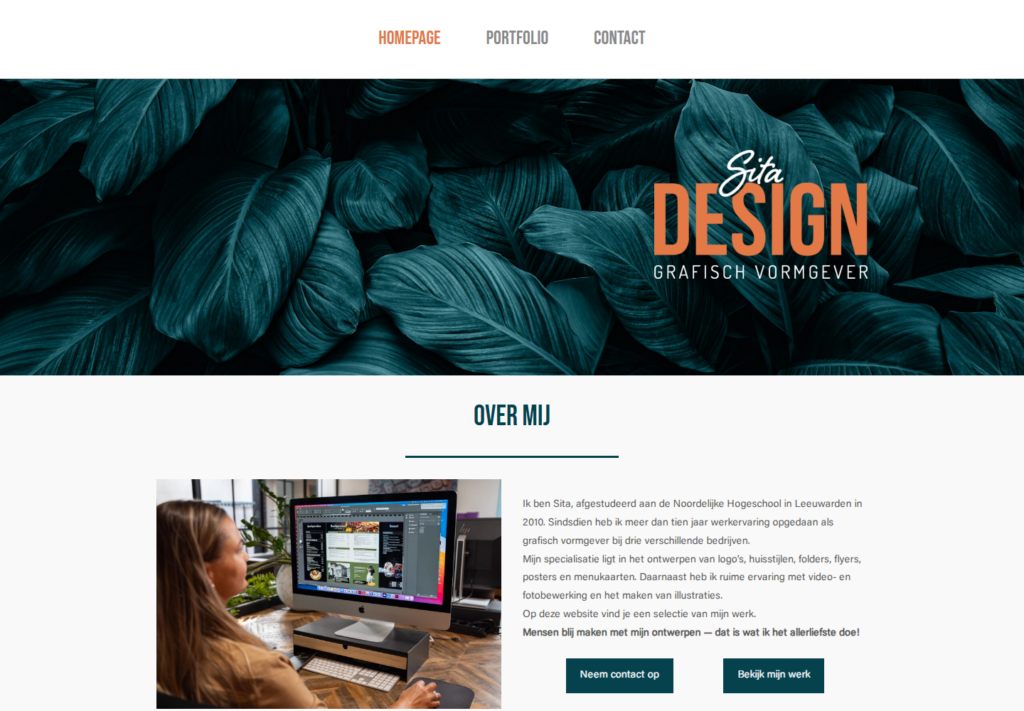
The rest of my work was done for clients and I cannot show it here by name. This site itself is part of the proof: the engineering, the details and the experiments below.
Two bigger things I built, both set up from scratch, with AI throughout the whole process.
A closed AI workspace for colleagues and supply-chain partners. Set up from the ground up.
For work I built a walled-off environment where colleagues and partners can work with AI without cutting between separate tools. Everything sits in one place, set up around our own brands and way of working. Access runs through accounts for authorised staff, and every generation is tied to the real cost behind it, so usage stays deliberate. From the setup to the features, I worked it out together with AI.
A trade-news and knowledge platform for entrepreneurs in a hospitality niche. Built end to end with AI support.
A platform with four separate environments behind one site: an admin area, an editorial environment, a partner portal and the public front end. For the reader it works like a digital trade paper plus knowledge base: industry news and regulation, figures on consumer behaviour, and practical tips on marketing, operations and new products. Editors publish from the editorial environment, suppliers and partners submit their own material through the portal, and the admin area holds it all together. Setup, code and configuration all came together with AI support.
Small, standalone things I built or tried out. No client work, just seeing what is possible.
A cursor that follows with a slight delay and grows over links and buttons. Vanilla JS, requestAnimationFrame, no library. Try it below.
Crawls a page through a set of technical checks (meta, OG, structured data, Core Web Vitals, link structure) and returns a score with concrete points.
Sample output. The real tool crawls a given URL.
A ⌘K command palette in vanilla JS: filtering, keyboard navigation, actions. No dependencies. The exact same component that sits in this site's nav.
⌘K / CtrlK. This is the exact same component that sits in the nav.
A simple site takes two to three weeks. For custom work or a web shop, count on four to eight weeks, depending on scope and how quickly content and feedback come in.
Yes. Ongoing development, migrations and performance work are all regular work. You do not have to start over.
An idea of what the site should do and for whom. Copy and images can come later; I help think through the structure, and I'm happy to think along about how to get good copy or photography sorted.
Hosting itself I do not do, it is not worth it for me. I do help with the steps to set that up yourself. Updates, backups and keeping an eye on whether everything keeps working I can arrange for you.
Usually WordPress, because it is easy to manage. Magento for heavier web shops. What fits best depends on the project, not the other way around.